Project Presentation at the Zukunftsregion Steyr Summer Event
Around 400 guests from business, education, politics, culture and society gathered for the joint summer event organised by Zukunftsregion Steyr and Business Class Steyr . Alongside updates on current developments and projects in the region, the programme included guided tours through the city, introducing selected places and initiatives directly on site.
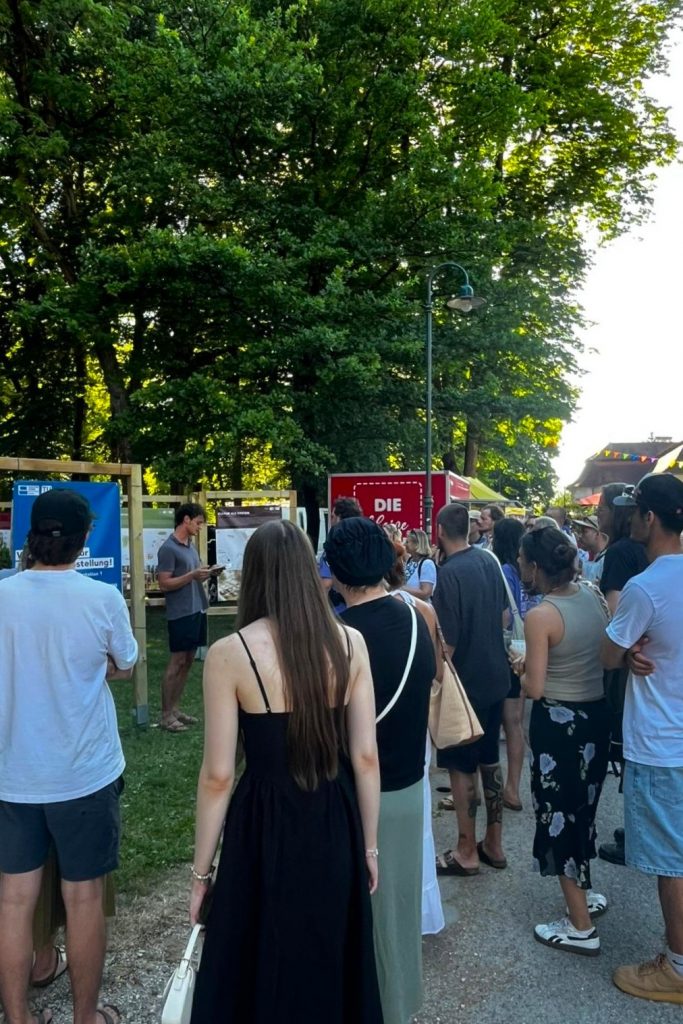
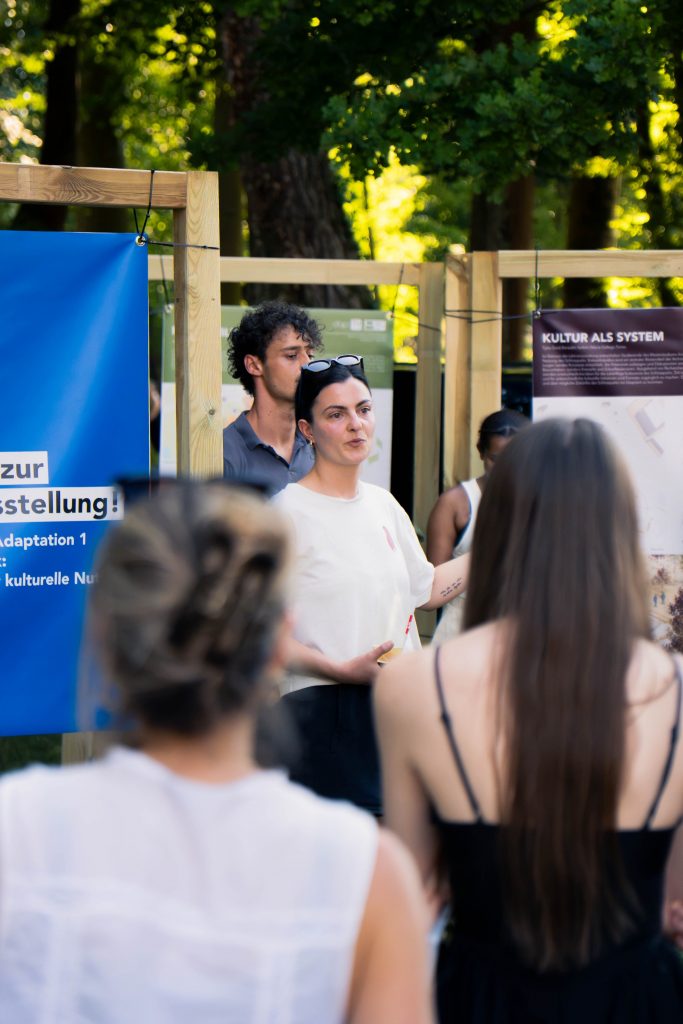
As part of these tours, participants also visited the Kulturzone Schlosspark. There, we presented our project and guided visitors through the exhibition of student designs, focusing on ideas for the future use and design of the Kulturzone as a space for events and a wide range of cultural activities. The tour provided an opportunity to explore the different approaches and discuss the future development of the area.
Read the event report by Zukunftsregion Steyr here.
Exhibition – Design for Adaptation 1
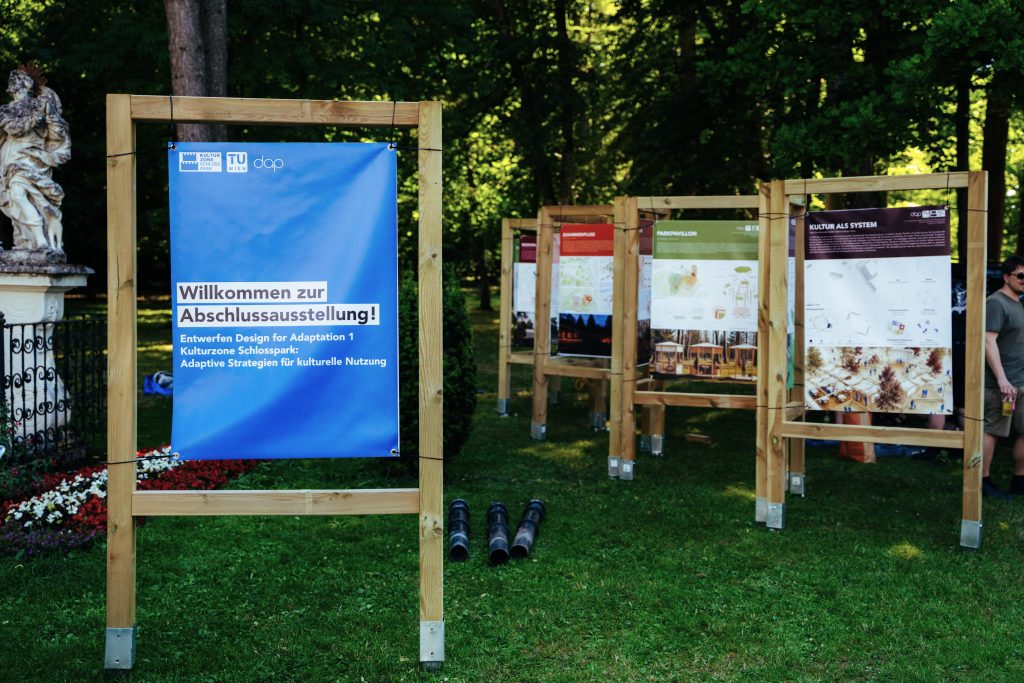
Ausstellungseröffnung © Marlon Spellak
The final exhibition took place at the end of June as part of the Steyrer Stadtfest and Grünland Festival in the Kulturzone at Schlosspark Steyr. Architecture students from TU Wien presented the results of the design studio Design for Adaptation 1 and offered insights into their proposals for the future cultural use of the Kulturzone.
Throughout the Summer Semester 2026, the students had been working on the “Kulturzone / Barocke Nordzone” designated in the Masterplan Schlosspark 2045. Building on research, analyses and surveys, teams of two to three students developed different future scenarios and spatial concepts for small-scale architectural structures and a variety of cultural uses within the Kulturzone.
The exhibition offered visitors the opportunity to explore these projects on site, talk to the students and reflect together on the potentials and possible future perspectives of the Kulturzone in Schlosspark Steyr. Many visitors took the opportunity to view the projects, ask questions and celebrate the end of the semester together with the students.
The exhibition will remain on display in Schlosspark Steyr over the summer – we would be delighted if you stopped by to take a look at the projects.
Read the full press article here.
Kick-off Event Kulturzone Schlosspark
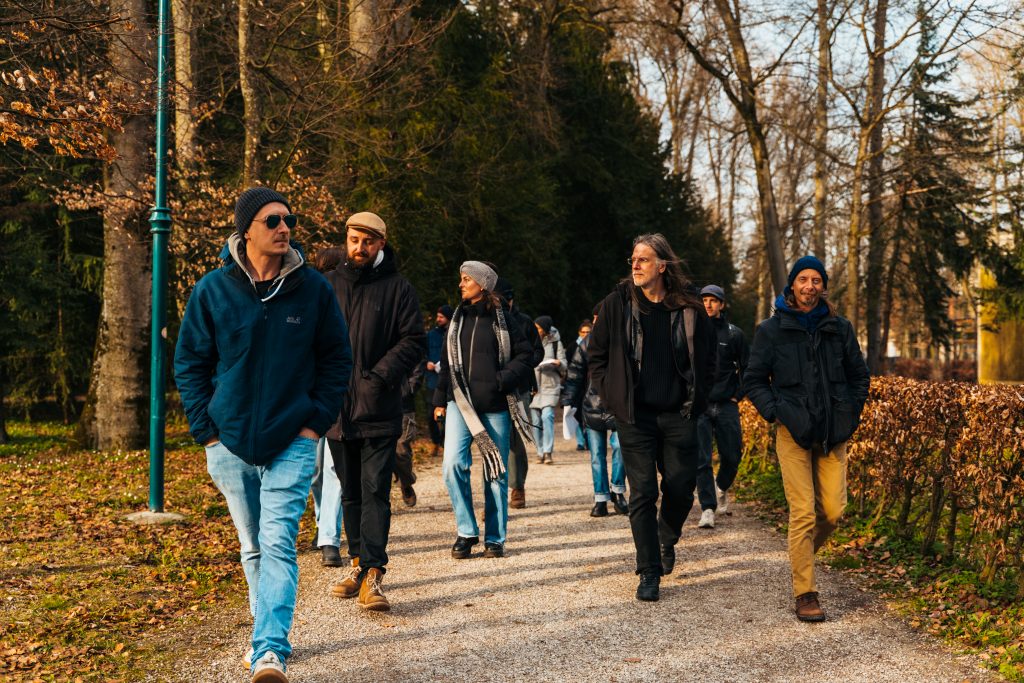
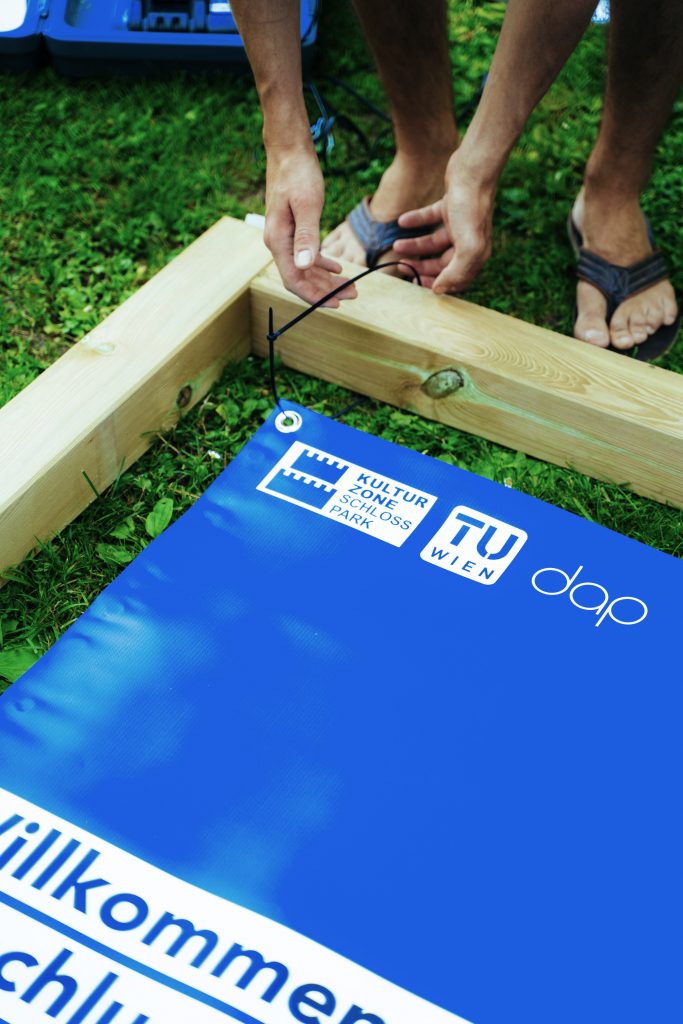
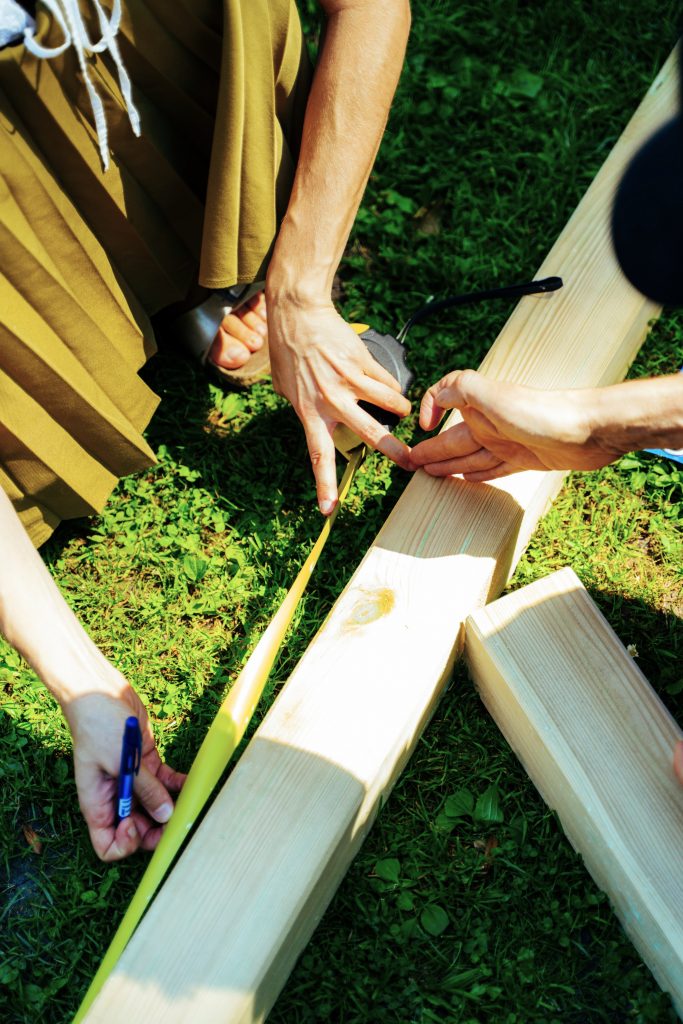
Schlosspark Site Visit © Marlon Spellak
The kick-off event took place in late March at Schlosspark and Museum Arbeitswelt in Steyr and provided an opportunity for students and local cultural actors to connect and exchange initial ideas for the future development of the Kulturzone.
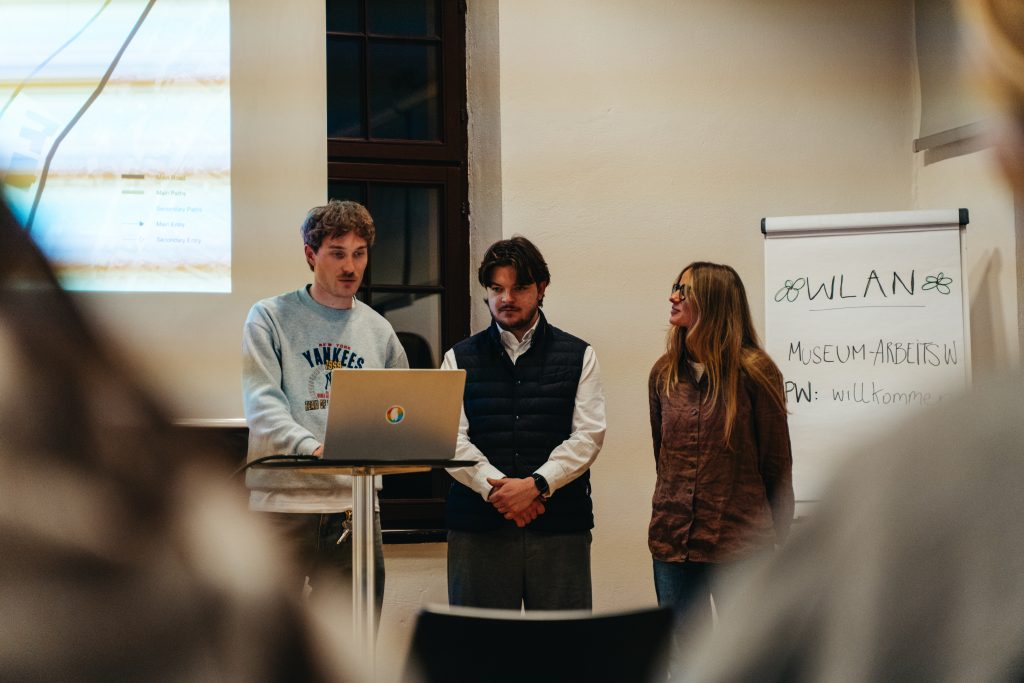
The event began with a guided walk through Schlosspark, where current developments and ongoing implementations of the Masterplan Schlosspark 2045 were presented. Afterwards, participants gathered at Museum Arbeitswelt, where Prof. Michael Hensel introduced selected projects and shared insights into previous work developed together with students. Stefanie Tischberger then presented the faculty and introduced the course topic. Students Sarah Fritz, Marlon Spallek and Leander Höltershinken presented the first results of the ongoing analysis phase, including contextual analyses, public surveys, typological studies and initial fieldwork.
To encourage further exchange, students and cultural actors then met in smaller discussion groups. These conversations focused on experiences, expectations and possible future directions for the Kulturzone, while also generating ideas for the subsequent design phase.
The kick-off provided an important foundation for the work carried out throughout the semester. Many of the themes, perspectives and questions raised during the event informed the following research and design process and ultimately shaped the development of the student projects.
Read the full press article here.
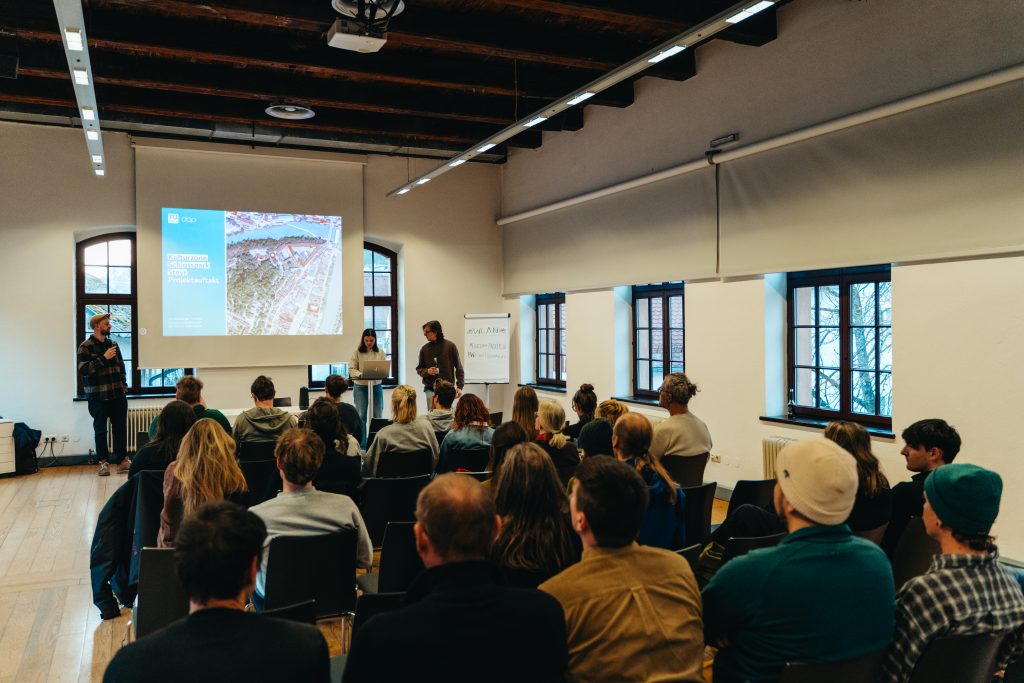
Gedankenaustausch Vereine © Marlon Spellak
Gedankenaustausch Vereine © Marlon Spellak